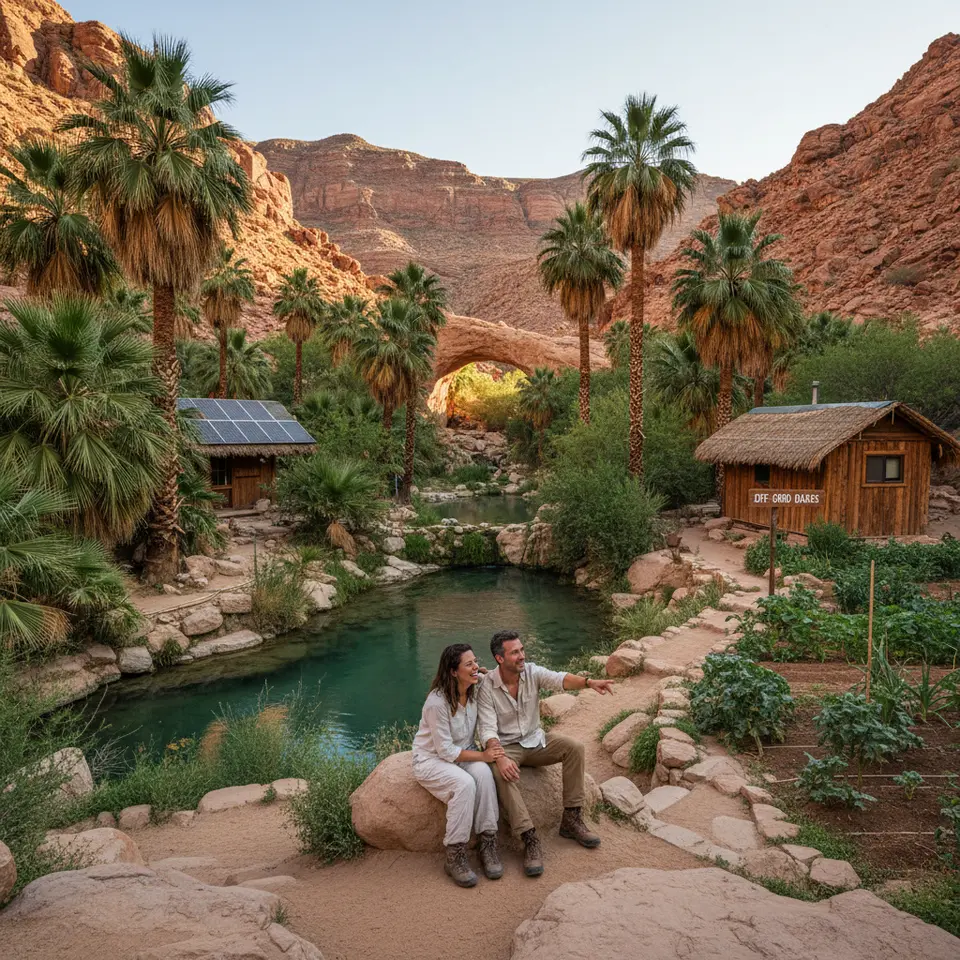
Today, more travelers are seeking off-the-grid desert escapes that combine serenity, cultural richness, and unspoiled landscapes. In today’s travel climate, deserts are no longer just barren expanses; they host hidden oases—lush pockets of palms, springs, and boutique retreats that remain off mainstream radar. Whether you dream of soaking in natural hot springs carved into canyon walls or sleeping under a canopy of stars in a traditional yurt, remote desert hideaways promise experiences far removed from crowded resorts and busy cities.
This year (2026), adventurers are embracing destinations that emphasize sustainability, community-led tourism, and immersive storytelling. From the fertile springs of Egypt’s Western Desert to the singing dunes of Central Asia’s Karakum, each location offers a unique blend of nature, history, and modern comfort. By venturing beyond paved roads and mapping out their own routes with reliable GPS devices—backed up by offline maps—visitors can uncover stories of ancient civilizations, taste local cuisine, and practice wellness rituals using time-honored techniques.
In this comprehensive guide, we’ll explore five categories of off-the-grid desert escapes, spotlighting nine remarkable oases. Along the way, you’ll find essential planning advice and external resources, including links to the National Park Service (https://www.nps.gov) and UNESCO (https://whc.unesco.org/en/list/) for further research. Whether you’re a solo nomad, a wellness seeker, or a culture enthusiast, prepare to ignite your wanderlust and discover the unseen desert sanctuaries that await in 2026.
African Desert Gateways: Siwa, Skoura, and Douz
North Africa offers a trove of off-the-grid desert escapes where history, culture, and nature converge. In Egypt’s Western Desert, Siwa Oasis is a timeless sanctuary cocooned by the Great Sand Sea and the Qattara Depression. Today, travelers can stay in restored mudbrick homes in the ancient Shali village, savor olive-oil massages infused with local botanicals, and immerse themselves in Bedouin hospitality. Cyclists and 4×4 enthusiasts explore salt flats en route to Cleopatra’s Bath, while evening feasts under the stars showcase hearty lamb tagines and freshly baked flatbreads. Siwa’s artisans invite visitors to shop for intricately carved silver jewelry and handwoven mats, supporting the local economy and preserving traditional crafts.
Further west in Morocco’s Ouarzazate Province, Skoura Oasis extends across 5,000 acres of date palms and century-old kasbahs. Boutique riads nestle among verdant groves, offering modern amenities alongside Berber design. Guests can wander narrow alleys beneath leafy canopies, tour the UNESCO-protected Amridil Kasbah, or assist farmers during the date harvest. Culinary enthusiasts will appreciate farm-to-table tagines, slow-cooked over open flames, and flavored with honey harvested from oasis apiaries. At night, desert camps ring with the rhythms of Berber music as storytellers gather under a blanket of stars.
In Tunisia, Douz Oasis reigns as the “Gateway to the Sahara.” Here, rows of date palms and argan trees line winding pathways leading to traditional guesthouses. Camel caravans depart at dawn for Erg Oriental’s towering dunes, while archaeologists and culture buffs explore the local Sahara Museum, which houses exhibits on Tuareg heritage and prehistoric rock art. Adventurers can try sandboarding or hop in a 4×4 for salt flat excursions. Community-led initiatives in Douz focus on sustainable tourism, ensuring that local guides and artisans share in the benefits of each visit.
Americas’ Hidden Springs: Huacachina and Saline Valley
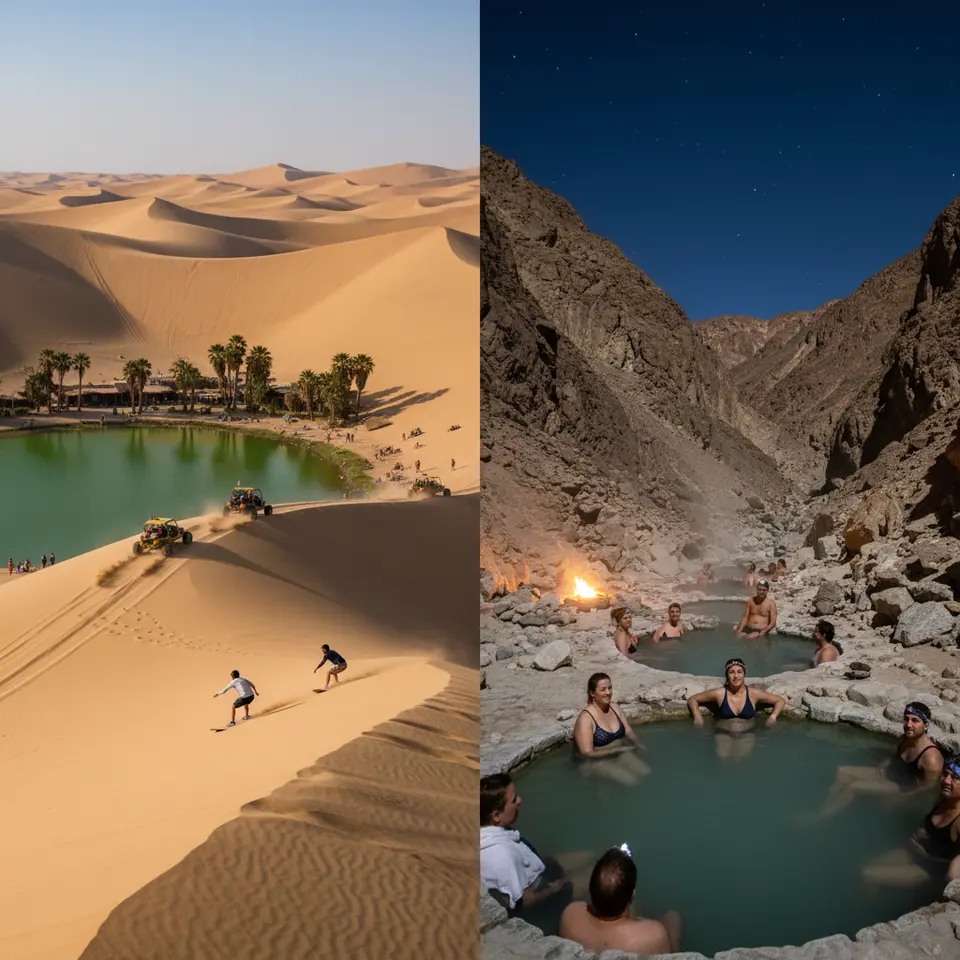
Across the Atlantic, South and North America boast their own gems among off-the-grid desert escapes. In Peru’s Ica Region, Huacachina is a tiny village built around a verdant lagoon said to have formed from a desert princess’s tears. Windblown ochre dunes rise hundreds of feet above date palms, providing the perfect playground for sandboarding and dune buggy chases. Adrenaline seekers can rocket downhill on customized boards before returning to eco-lodges for hammocks swaying beneath towering palms. Guided tours often include side trips to nearby vineyards, where guests sample Pisco in centuries-old bodegas.
Meanwhile, in Death Valley National Park, California, the Saline Valley Hot Springs remain some of the most secluded geothermal pools in the continental United States. Accessible only by high-clearance 4×4 vehicles, this off-the-grid oasis demands careful planning: pack a four-season tent, ample water, and durable cooking gear. Once on site, soak in mineral-rich tubs hewn from rock, framed by towering canyon walls. With minimal light pollution, star-gazers can observe constellations in crystal clarity. The National Park Service offers essential safety guidelines (https://www.nps.gov/deva/planyourvisit/saline-valley-hot-springs.htm), and travelers are encouraged to practice Leave No Trace principles to help preserve these fragile resources.
Middle Eastern & Central Asian Wonders: Al Ula and Kara Kum
The Arabian Peninsula and Central Asia feature desert escapes steeped in ancient heritage. In Saudi Arabia’s Al Madinah Province, Al Ula Oasis sits amidst towering sandstone formations and carved Nabatean tombs. Recent tourism initiatives have delivered luxury camps that blend into the rock face, desert spas offering treatments with date-palm oils, and curated culinary events celebrating regional ingredients. Hegra (Madain Saleh), the country’s first UNESCO World Heritage Site, invites visitors to wander centuries-old tomb facades chiseled into rose-hued cliffs. Hot-air balloon rides at sunrise paint the rugged landscape in golden hues.
Thousands of miles northeast in Turkmenistan’s Karakum Desert, Kara Kum Oasis Camp is managed by nomadic families whose ancestors roamed these dunes for centuries. Yurts furnished with handwoven carpets and felt bedding offer immersive stays. Days begin with salty camel-milk tea, followed by camelback treks to dunes that “sing” as wind sweeps across sand ridges. Guests learn falconry techniques, master yurt assembly, and join in communal meals of hearty stews baked in underground tandyrs. Evenings glow with folk music around an open fire, forging deep connections between visitors and hosts.
Moroccan Dunes & Australian Palms: Erg Chebbi and Palm Valley
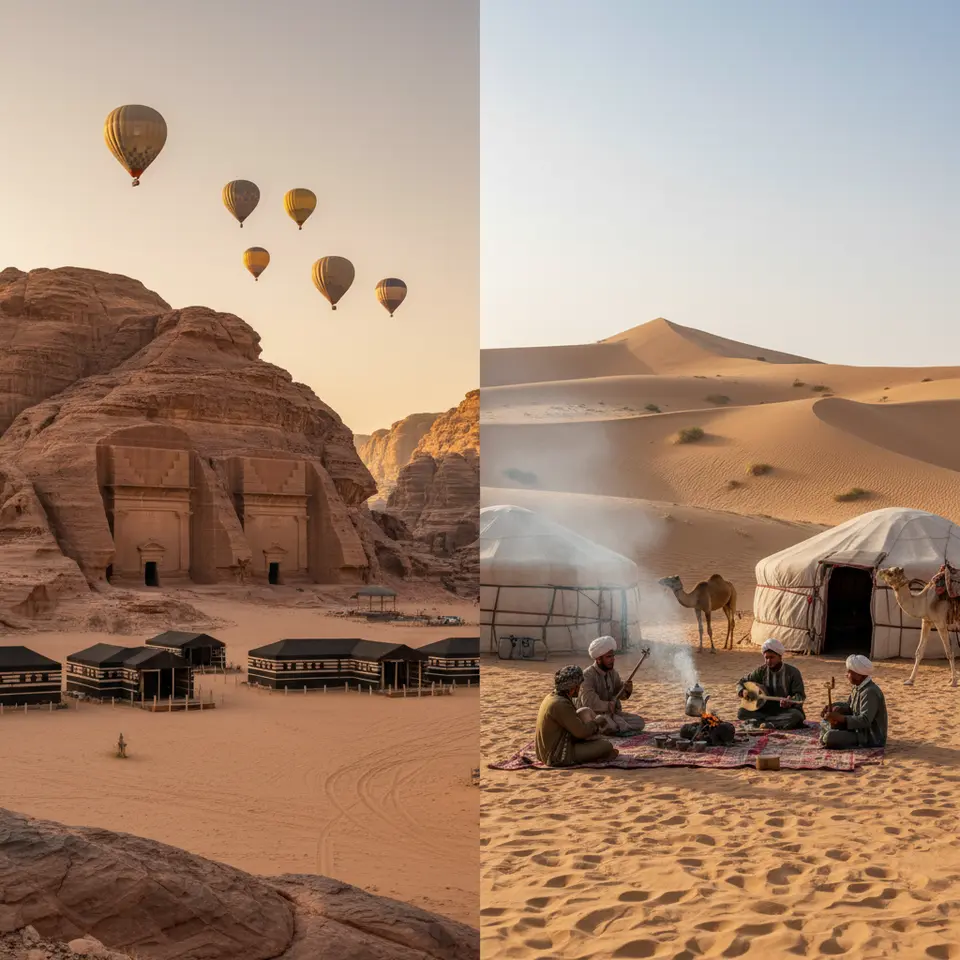
Morocco’s Erg Chebbi dunes are legendary for their towering sand waves and Bedouin hospitality. Erg Chebbi Oasis Camp offers plush, canvas tents with star-view rooftops and private verandas. At dawn, camel caravans climb golden ridges for a sunrise spectacle. Days fill with yoga sessions on the sand, henna-art workshops, and expeditions to fossil-laden plains. Evenings converge in communal tents for live drumming under one of the world’s most expansive star fields.
On the other side of the globe, Palm Valley Oasis in Australia’s Finke Gorge National Park shelters an isolated grove of Red Cabbage Palms—remnants of an ancient rainforest. Only accessible by challenging 4WD tracks, this sanctuary features sandstone gorges and permanent waterholes. Indigenous rangers lead guided walks, sharing Dreamtime legends and explaining how species have adapted to the arid climate. As sunset sets the gorge ablaze with red and gold hues, campers settle beside crystal pools for an unforgettable night beneath the Southern Cross.
Planning & Packing for Off-The-Grid Desert Escapes
Embarking on off-the-grid desert escapes requires thorough preparation to ensure comfort, safety, and respect for local communities. Always carry at least four liters of water per person per day; dehydration is the greatest risk in arid regions. High-SPF sunscreen, wide-brimmed hats, UV-protective clothing, and quality sunglasses are indispensable. Invest in a reliable GPS device and offline mapping solutions, as cell service can vanish in remote canyons and dunes.
Clothing should be breathable and quick-drying for daytime heat, with layered options for cooler nights. For those camping, a four-season tent, insulated sleeping pad, and compact stove will prove invaluable. First-aid kits, spare batteries, and multi-tool kits can address unforeseen challenges. Respect cultural norms: many desert communities observe modest dress codes and have guidelines regarding alcohol, photography, and interactions. Before you depart, review health advisories from government sites such as the Centers for Disease Control and Prevention (https://www.cdc.gov) or your country’s foreign travel office.
Finally, choose eco-friendly accommodations and support locally owned camps, lodges, or tour operators. In this year (2026), sustainable practices such as solar energy, water recycling, and plastic-free initiatives are increasingly adopted by reputable desert camps. By traveling thoughtfully, you’ll help preserve these unique oases for future generations of explorers.
Frequently Asked Questions
What is the best time of year to visit off-the-grid desert escapes?
Most desert oases are best explored during the shoulder seasons of spring (March–May) and autumn (September–November), when daytime temperatures are moderate and nights are cool.
How can I minimize my environmental impact?
Follow Leave No Trace principles by packing out all waste, using reusable water bottles, choosing eco-friendly camps, and respecting local wildlife and plant life.
Is it safe to travel alone in remote desert areas?
Solo travel is possible with proper planning: share your itinerary with trusted contacts, carry satellite communication devices, and consider joining guided groups for added security.
Conclusion
In 2026, off-the-grid desert escapes offer unparalleled opportunities to reconnect with nature, delve into ancient cultures, and discover hidden sanctuaries far from crowded pathways. From the emerald palms of North Africa to the solar-heated springs of California, each oasis presents its own story and sense of wonder. By planning carefully, packing wisely, and respecting local customs, you can embark on transformative journeys that nourish the body and soul. Venture beyond the ordinary and let these desert havens reveal the silent beauty and rich heritage that lie at the heart of our planet’s most arid frontiers.